Domain age myth: why new domains still get approved in 2026
A 30-day-old domain can pass on the first try, and an old domain can still be rejected. Domain age is informational, not a quality gate.
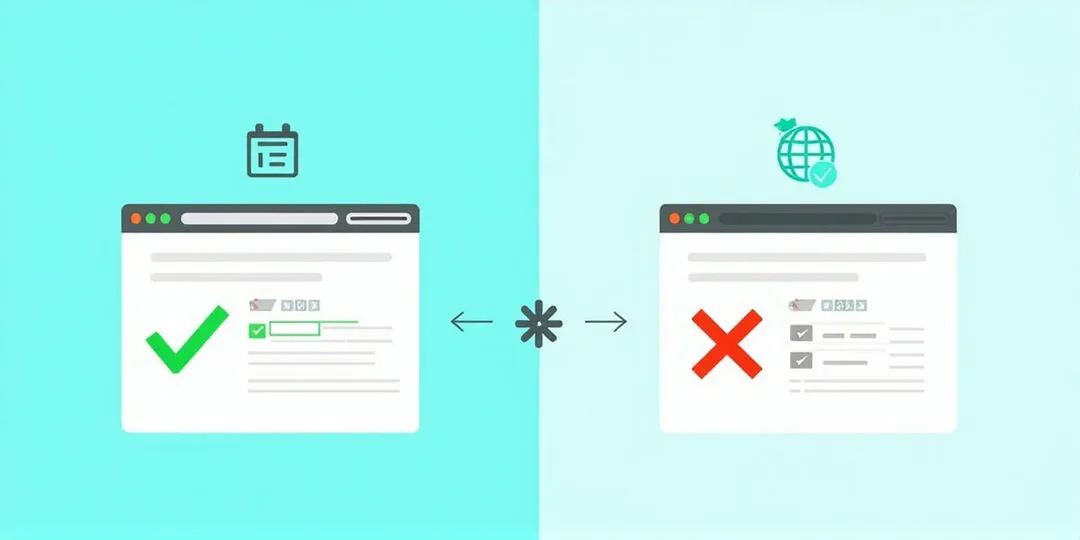
Domain age is the most-cited 'reason' for AdSense rejection in forums and SEO blogs, and it's almost always wrong. New domains get approved. Old domains get rejected. Google's documentation has never listed domain age as a factor. The search quality rater guidelines mention 'reputation' but never 'age' as a signal. The actual reviewer behavior, inferred from thousands of approval and rejection audits, treats age as informational at best.
What 'domain age' means
Domain age in the AdSense context is the time between the domain's registration date and today. The registration date is the date the WHOIS record was created at the registrar, for a brand-new domain, it's yesterday. For a domain first registered in 2014, it's some date in 2014. WHOIS data is the public source for this; AdSense's audit system uses the public RDAP protocol (the WHOIS successor standardized by IETF) to fetch it.
What the reviewer checks
When AdSense evaluates a site, the reviewer's pipeline (a mix of automated checks and human review for borderline cases) reads several signals, none of which are 'how long has the domain existed'. The signals most consistently correlated with approval, in order of impact:
- Content depth and originality, measured by word count per page, sentence variety, and lexical diversity across the crawl. The Panda algorithm's 2011 thin-content signal is still the single strongest predictor of rejection.
- Site structure, at minimum 4-5 interlinked pages, a navigation bar visible on every page, and a clear homepage-to-article hierarchy. Sites that look like single-page microsites are flagged.
- Required legal pages, /privacy, /terms, /contact, /about. The presence of these pages matters more than the wording; Google's auto-checker verifies the URL responds and contains certain keywords (Privacy Policy, Contact Us, etc.). See required pages guide.
- Technical correctness, no broken navigation, no parked-domain header, no 5xx errors during crawl, no cloaking, no JS-only rendering that hides text from the crawler.
- Ad placement strategy, ads above the fold tanking LCP is a soft signal, but ads.txt issues and policy violations are hard signals. See ads.txt guide for the most common block.
Domain age is not in this list. We've seen domains 12 days old pass on the first application, and we've seen 14-year-old domains rejected on their 6th application because the content was unchanged thin material. The reviewers don't appear to weight age as a positive or negative signal.
Where the myth comes from
The myth has 3 plausible origins. First, the 2011 Panda update disproportionately affected new content farms, and people conflated 'new content' with 'new domain'. The actual signal was thin content regardless of site age. Second, affiliate marketers in the 2010s registered dozens of throwaway domains and reused the same template across them; many of those were rejected, reinforcing the new-domain = bad association. Third, Google has historically been conservative with very new sites in industries like finance and health (YMYL), but that's a YMYL signal, not an age signal, and a new domain in a non-YMYL niche (recipes, hobbies, software) has no such issue.
When age does matter
There are 2 narrow cases where age correlates with approval:
- YMYL niches (Your Money Your Life): finance, health, legal, news. Google applies stricter review to these regardless of site age, and a 30-day-old finance site is treated with more skepticism than a 5-year-old one. The age isn't the gate, the category is. A 5-year-old YMYL site with thin content is still rejected; a 60-day-old hobby blog is fine.
- Recovering from a previous rejection: if a previous application was rejected, AdSense's reviewer may look harder at subsequent applications on the same domain. A different domain (even a sibling) starts fresh. But this is about rejection history, not age per se.
How to improve your approval odds
If you have a brand-new domain, your time is better spent on the 5 signals above than waiting. :
- Publish at least 8-10 substantive articles (800+ words each) before applying. The threshold for 'looks like a real site' is somewhere in this range; below 5 articles most sites get flagged as thin.
- Make sure /privacy, /terms, /contact, and /about are all present, reachable from your main navigation, and contain real text (not placeholder Lorem ipsum).
- Set up ads.txt with the correct pub-ID before you apply, this is the single fastest way to get past the technical checks.
- Don't apply and re-apply on a tight loop. Wait at least 14 days between applications, ideally 30. Each rejection triggers a re-review that can take days to process.
- Run a /audit before you apply. The audit catches the 5 top rejection signals in 10 seconds and tells you which ones need work.
What to do if you've been rejected
If your domain has been rejected, the rejection email is a one-liner: 'low value site', 'insufficient content', 'policy violation'. The fix is to address the specific signal, not to wait, not to register a new domain, not to switch to a different ad network. Re-apply after you've made the changes and the audit comes back clean. If you've been rejected twice on the same domain with the same content, the issue is the content, not the domain.
Domain age is the most-repeated wrong explanation for AdSense rejection. The signal that matters is the content, the structure, and the policy compliance. New domains with all three pass. Old domains with any of the three missing fail.