How to fix AdSense low value content (checklist)
This low value content fix guide turns vague rejection feedback into a concrete page-level checklist you can apply in one week.
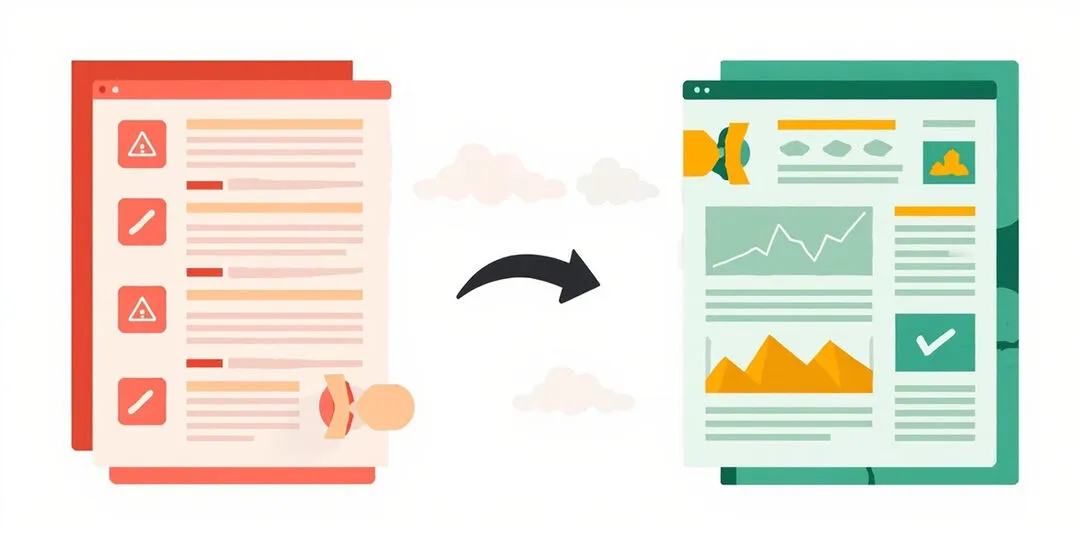
If your AdSense application was rejected for low value content, the issue is usually not one sentence in one article. It is a site-level signal mix: weak intent coverage, shallow pages, and low trust structure. This guide gives a low value content fix checklist you can run page by page before reapplying.
What low value content means in practice
Low value content means a reviewer could not confirm that your pages deliver original, useful outcomes for a real audience. In many rejected sites, pages are technically correct but interchangeable: the same template text, no examples, and no evidence of first-hand experience.
The 7-point low value content fix checklist
- Define one search intent per page. Every page should answer one clear user job, not many weak ones.
- Rewrite the opening paragraph with a direct promise and scope. Avoid generic intros.
- Add concrete examples, screenshots, or failure cases that did not come from template text.
- Expand thin pages to practical depth. Include causes, fixes, and edge cases users face.
- Improve trust structure: visible about, contact, privacy, and terms pages with real details.
- Link related pages so users can continue the task flow instead of returning to homepage.
- Remove or merge duplicate pages that target the same keyword with near-identical copy.
A one-week remediation plan
- Day 1: audit all public URLs and mark pass or fail for intent clarity, depth, and originality.
- Day 2-3: fix your top 5 traffic pages first, including title, intro, examples, and internal links.
- Day 4: repair structural trust pages and verify each URL returns 200 with indexable content.
- Day 5: consolidate duplicate pages and update canonicals where overlap exists.
- Day 6-7: final QA using full site audit and prioritize remaining issues via pricing workflow.
What to avoid before reapplication
- Do not publish many short posts to inflate count without improving page usefulness.
- Do not copy policy summaries from other sites without adding your own implementation guidance.
- Do not submit again until your weakest pages are improved, not only your best pages.
The most reliable win is consistency: fewer pages with strong utility beats many pages with repetitive copy. If you need a second lens, compare your weakest URLs with the structural fixes in utility site rejection guide.
Need a fast page-level signal check before rewriting? Run core pages checker and prioritize the weakest URLs first.
What does low-value content usually look like?
It often shows as thin pages, repeated templates with small keyword swaps, and weak user outcomes after the click.
How many pages should be rewritten first?
Start with pages that combine high traffic and low quality signals, then expand after the first recovery pass.
When should you reapply after fixing low-value pages?
Reapply only after required blockers are cleared and rewritten pages show consistent structure, intent match, and internal navigation depth.